01 / REPAIRS
Record the damage without pulling it apart.
From a safe position, note the location and visible issue: a split board, loose connection, missing cap or panel out of alignment. Include whether the change followed an impact, weather event or earlier work nearby.
Do not force a damaged assembly back into place to test it. If a section is unstable or leaves an unsafe opening, keep people and pets away and arrange an appropriate assessment. A photograph is useful context, not a diagnosis of hidden damage.
02 / REPAIRS
Find the product information.
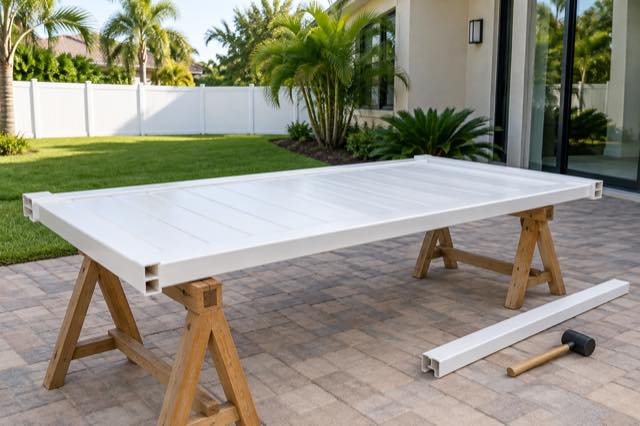
Look for an invoice, product label, installation record or manufacturer name from the original work. Panel dimensions, rail profiles and attachment methods can differ between systems, even when the visible color is similar.
Include the product identifiers and damaged parts in your inquiry so compatibility and availability questions can be considered. Keep a separate question about appearance: a compatible new part may not look identical to a weathered neighboring section. Resolve that expectation before accepting the scope.
03 / REPAIRS
Compare a focused repair with a larger section.
Request a clear description of what will be replaced and what will remain. Ask whether adjacent posts, rails or gate connections need attention, and whether taking apart one area affects the surrounding run.
Include removal of damaged pieces, disposal and any finish or color limitations in the written proposal. If the fence serves a special barrier purpose, include that use in your project details before work is planned and ask how the opening will be managed during the repair.
MAKE IT USEFUL
Make the repair easier to identify.
Select the details you want to discuss with our team. Keep a copy for your project notes.
One more thing.
Can any white vinyl panel replace the damaged one?
No compatibility should be assumed from color alone. The dimensions, profiles and connections need to match the system or be addressed in a complete replacement approach.