
01 / MATERIALS
Stand where you actually spend time.
Look outward from the places you use most, both sitting and standing. A fence that screens the lawn may leave an elevated window or raised patio visible. Write down the specific sightline instead of choosing a height from a photograph.
Also look back toward the house. Consider whether an uninterrupted solid boundary will feel calm or enclosed, and whether planting or an open section would make a better transition near the front of the property.
02 / MATERIALS
Compare the whole panel system.
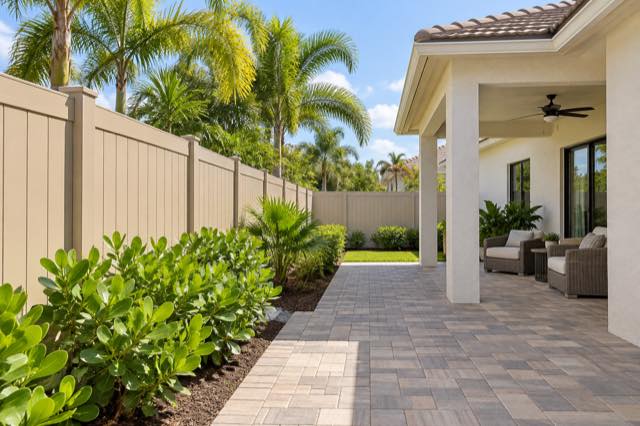
Ask for the panel style, posts, rails, caps and gate components to be identified together. Two white privacy fences can differ in the proportions of their rails, the width of the boards and the way sections meet the posts.
Review a real product sample where possible. Confirm the usable panel dimensions and how the layout finishes at corners, narrow returns and the last section of a run. Those small transitions strongly influence the finished appearance.
03 / MATERIALS
Look for the places privacy can open up.
A solid panel is only one part of the line. Discuss the spaces below panels, beside gate leaves and around changes in elevation. The appropriate solution depends on the selected system and the site; it should be shown in the layout.
Think about access before closing every edge. A gate placed for everyday convenience may face a neighbor’s window when open. Note the normal walking route and the screening goal together so one choice does not undermine the other.
MAKE IT USEFUL
Your privacy brief.
Select the details you want to discuss with our team. Keep a copy for your project notes.
One more thing.
Is a solid fence the right choice for the entire yard?
Not necessarily. Some yards benefit from solid screening beside a patio and an open edge elsewhere. Compare the intended use of each run, subject to the property’s applicable requirements.