
01 / PLANNING
Collect the documents you already have.
Look for a survey among closing or property records and identify when it was prepared. Note changes that may have occurred since then, including additions, paving or previous fence work. Ask a qualified professional whether the information is appropriate for the current project.
The City of Port St. Lucie fence checklist asks for a survey or accessory-use map showing the fence location. Use the current application instructions and confirm what is required for your specific property.
02 / PLANNING
Put questions on the plan.
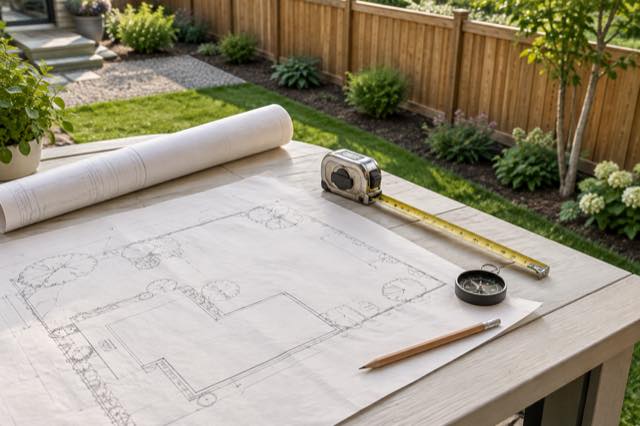
Mark the intended line, gates and connections to existing structures. Identify places where ownership, a corner location or a shared boundary is unclear. A question marked on a plan is more useful than a confident assumption that later has to be corrected.
If a boundary is disputed or unclear, obtain the appropriate professional advice before authorizing work. An installation layout or rough sketch does not replace the records and professional review needed to resolve a property boundary.
03 / PLANNING
Ask how easements affect the proposal.
The City’s fence packet includes provisions concerning work in utility or drainage easements. Ask the relevant authority and qualified professionals to interpret the records and the proposed placement rather than applying a generic setback or clearance rule.
Discuss any ongoing access needs, required approvals and responsibilities if a fence must be moved. Keep the resolved instructions with the final layout and project scope. Do not assume that an existing fence proves a replacement in the same place is authorized.
MAKE IT USEFUL
Your property-information folder.
Select the details you want to discuss with our team. Keep a copy for your project notes.
One more thing.
Can I use my neighbor’s fence as the boundary reference?
Treat it as a visible feature to discuss, not proof of the legal line. Ask the appropriate professional to resolve the boundary using suitable records and site information.