
01 / REPAIRS
Describe the point of interference.
Does the leaf touch the ground throughout the swing or only near one position? Does the latch miss when the gate is otherwise free to move? Note the difference and whether the behavior is constant or has recently changed.
Record nearby paving, soil, vegetation or objects that may obstruct the route. Avoid repeatedly forcing the gate through resistance. Include those observations in your inquiry so the gate movement and surroundings are clear.
02 / REPAIRS
Include the supporting system.
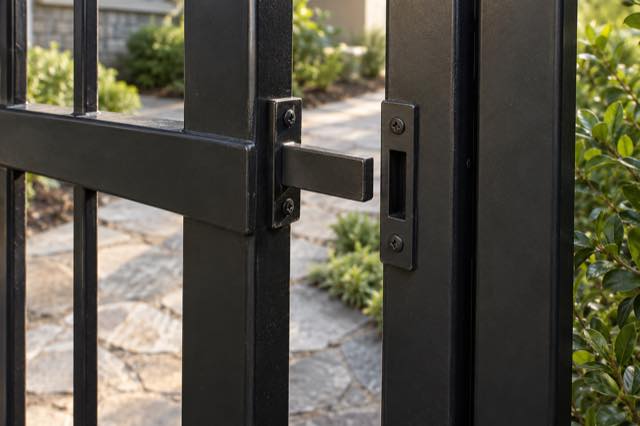
Ask for the gate leaf, posts, hinges, latch and relevant connections to be reviewed together. A hardware symptom can coexist with a support or alignment issue. The proposed repair should explain which parts are being adjusted, replaced or retained.
Keep the manufacturer and hardware model information if available. Replacement hardware should be selected for the actual assembly and use. A part that physically fits is not automatically suitable for the gate’s weight, operation or special requirements.
03 / REPAIRS
Confirm the result, not just the new part.
Normal opening, closing and latching all belong in the repair scope. Clarify the full swing clearance and the expected operation from each side. Include the care instructions for any replacement hardware.
If the gate forms part of a pool barrier or another safety-related enclosure, make that use clear in your inquiry. Keep access controlled through an appropriate safe arrangement while the defect is addressed, and obtain a specific review of the required closing and latching behavior.
MAKE IT USEFUL
Your gate repair observations.
Select the details you want to discuss with our team. Keep a copy for your project notes.
One more thing.
Is a self-closing hinge enough for a pool gate?
A single component does not establish that the entire barrier is suitable. The gate, latch, openings, layout and applicable requirements need to be considered together by a qualified provider.