
01 / GATES & ACCESS
Trace a real trip through the yard.
Walk from the driveway to the side door, garden or patio. Imagine carrying groceries, rolling a bin or walking beside someone. An opening that looks centered on the fence may be less convenient than one aligned with the route.
Note nearby steps, planting, hose reels and objects that could interrupt the approach. The gate should be considered with the path on both sides, not only as a closed rectangle within the fence.
02 / GATES & ACCESS
Agree on the opening and swing.
The gate leaf, space between posts and clear passage when open are different dimensions to include in your project discussion. Hardware and the position of the leaf affect what can actually pass through. Identify the widest everyday object you expect to move.
Discuss the swing through its full arc, including the ground beneath it. Grade changes, paving and edging can affect the available clearance. For any regulated use, confirm the required operation before choosing a swing direction for convenience alone.
03 / GATES & ACCESS
Choose hardware for the way it will be used.
Consider how the latch is reached from each side and who will operate it. Ask about the proposed hinges, latch, stops and any closing mechanism, along with the maintenance instructions for the specific components.
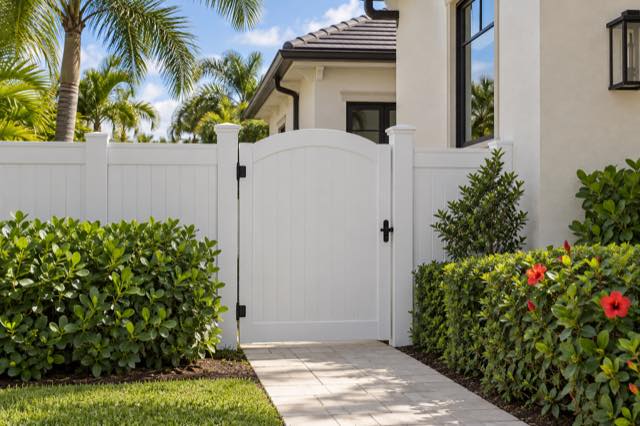
Include the gate’s appearance in the material schedule. Confirm the top line, finish and relationship to adjacent panels. A small elevation sketch can resolve misunderstandings about whether a gate should blend into the run or stand out as an entrance.
MAKE IT USEFUL
Walk the gate plan before it is built.
Select the details you want to discuss with our team. Keep a copy for your project notes.
One more thing.
Can I select the swing direction myself?
Tell our team your preferred swing direction and any constraints around the opening. Site conditions, hardware and applicable requirements need to be considered together. Pool-related gates need a specific review rather than a convenience-based decision.