
01 / MATERIALS
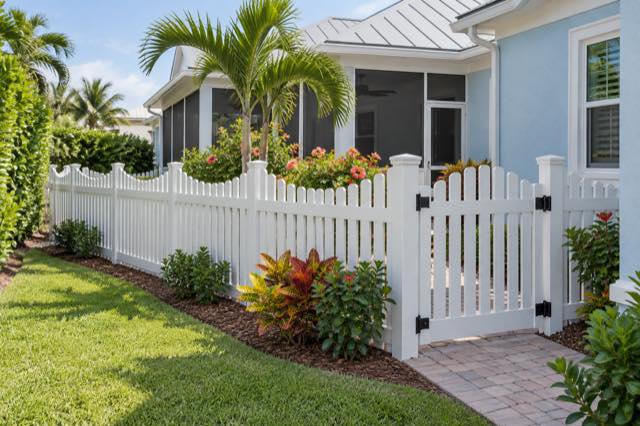
Look at the fence as part of the frontage.
Consider the porch, window trim, planting beds and width of the lawn before selecting a picket profile. A simple repeated pattern can make a small garden feel orderly; a more decorative top may compete with details already on the house.
View a sample from the sidewalk as well as from the yard. Post size and cap style can stand out more than the picket shape once the fence is seen as a complete run. Include those components in the same style decision.
02 / MATERIALS
Make the gate feel intentional.
Begin with the actual walking route. Centering a gate on a fence section may look balanced but create an awkward turn away from the path. Mark the intended opening and discuss the swing, latch reach and transition to paving.
A shaped gate can be a focal point, while a straight top can make the opening blend into the fence. Ask whether the proposed gate is part of the same product family and how its hardware will appear on each side.
03 / MATERIALS
Separate a visual boundary from a barrier.
Open pickets let the landscape remain visible. They do not provide solid screening, and their spacing and height must be considered against the fence’s intended purpose. Record pet containment or pool-related needs before finalizing the design.
Front, corner and street-facing locations can raise property-specific review questions. Confirm the allowable placement and design through the relevant authority and association process instead of copying a neighbor’s fence or choosing solely from a catalog image.
MAKE IT USEFUL
A better picket-fence conversation.
Select the details you want to discuss with our team. Keep a copy for your project notes.
One more thing.
Can a picket fence transition into a privacy fence?
It can be explored as a design approach. Ask how the change of material height, post arrangement and finished line will be handled, and confirm that each part is appropriate for its location.