
01 / YARD NEEDS
Describe behavior before choosing a style.
Note whether your dog jumps at a boundary, digs, pushes against openings or reacts to activity outside the yard. A design that works well for one animal may be a poor fit for another. Discuss these observations without assuming a breed label settles the answer.
Consider visibility as well as enclosure. An open fence keeps outside activity in view; a solid boundary changes those sightlines. Think about the animal’s response and seek appropriate veterinary or behavior guidance when the issue extends beyond the physical layout.
02 / YARD NEEDS
Look at the whole perimeter.
Check the intended line at corners, grade changes, structures and existing fences. The opening below a panel or beside a gate can matter as much as the panel itself. Include those transitions and your pet’s containment needs when you contact our team.
Do not add improvised attachments or modify the fence without checking suitability. A product chosen for one layout may not support an added screen or altered opening. Make the intended containment needs part of the initial specification and site review.
03 / YARD NEEDS
Make gates part of the household routine.
Identify which gate is used for deliveries, bins, gardening and everyday walking. Consider who will open it and how people will know a pet is in the yard. The location and hardware should support a routine that is easy to follow.
Arrange a separate, appropriate way to manage pets during removal or installation. Include your pet’s needs in your inquiry and the arrangements for the work area. Continue supervision and regular observation after the project; a finished fence does not remove the need to check its condition and operation.
MAKE IT USEFUL
A pet-specific project brief.
Select the details you want to discuss with our team. Keep a copy for your project notes.
One more thing.
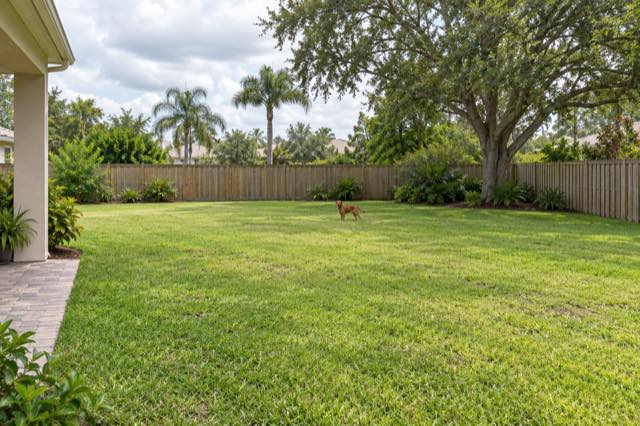
Can I choose from a photo of a fence with a dog?
A photo cannot establish containment for your animal. Ask about actual openings, ground transitions, gate operation and the animal’s behavior, then evaluate the arrangement over time.